

Black Friday Tech Deals: When Older Models Are Smart Buys—and When They Aren’t
An older device can be excellent value. Learn how to assess its exact configuration, support, seller and price before a seasonal promotion.


A genuine discount can still be a poor purchase. The seller may have reduced the price honestly, yet the laptop has the wrong screen, the phone is near the end of its support period, or the television lacks the connection your console needs. An older product can also be an excellent buy when its useful capabilities have barely changed.
Black Friday makes more sense when you separate three questions: is the saving real, is this exact product still good for the job, and are the seller and final terms acceptable? The percentage answers only part of the first question.
This guide uses the purchasing context available on 20 October 2026. November promotions are not completed results, and a forecast is not a promise about the price of a particular device.
What a retailer can legitimately be doing
Technology sellers have several legitimate reasons to reduce prices: clearing remaining inventory, promoting a manufacturer-funded campaign, attracting customers to a category or shifting a previous generation after its successor arrives. These are possible commercial mechanisms, not an explanation we can assign to an individual offer without evidence.
Public seller documentation can reveal part of the preparation. The eMAG Marketplace 2026 campaign guide, for example, describes offer eligibility, stock requirements, promotional visibility and commission incentives. It identifies 6 November as eMAG’s Romanian event date. Those are that platform’s arrangements, not universal Black Friday rules or evidence that every participating product is clearance stock.
Internationally, the conventional 2026 Black Friday date is 27 November, but retailers run different schedules. Adobe’s 2026 holiday research also discusses early shopping in October. Its US-market findings and forecasts should not be read as Romanian buying statistics or a guarantee of November’s best deal.
A manufacturer promotion may operate through a direct price cut, a retailer allowance, cashback or a bundle. Check who supplies the benefit and what you must do to receive it. An advertised cashback amount is not money saved at checkout if it requires a later claim, an eligible serial number and approval.
Previous generation, discontinued and unsupported are different
“Last year’s model” tells you its age, not whether it remains suitable. “Discontinued” may mean production or sale has ended. “End of life” needs context: it might refer to sales, a software release, repairs or security support. Ask which service is actually ending and when.
Legitimate surplus exists outside sales events too. Dell’s Outlet documentation distinguishes inventory conditions such as overstock and returned or refurbished products. That does not make an Outlet listing a Black Friday offer, and new, open-box and refurbished stock should not be compared as though their condition were identical.
An older premium device may retain a better display, chassis, camera system or port selection than a newer budget product. The newer model may instead offer longer remaining updates, improved efficiency, a newer wireless standard or a feature the older one cannot gain. Compare the particular pair against your use, rather than choosing a winner from the words “flagship” and “new.”
Clearance becomes unattractive when the discount buys limitations you will immediately have to work around. If your essential application needs a newer operating system, a beautifully built laptop that cannot support it is not rescued by its original launch price.
Count the support remaining from today
A product’s advertised update period may begin at launch, not on your purchase date. Google’s Pixel support policy, for example, explains the starting point for its update commitments. Check the exact model’s end date and the types of updates covered. A promise about security patches is not necessarily a promise about every new feature.
In the EU, qualifying smartphones and tablets are also subject to ecodesign and energy-label requirements applying from 20 June 2025. The rules have defined scope and timing; do not assume a previously manufactured or globally sold model has identical obligations everywhere. EPREL can provide model-specific product information for relevant EU devices.
For laptops, TVs and peripherals, examine operating-system eligibility, drivers, firmware, repair options and any service on which a feature depends. Continued app availability on a smart television is a separate question from whether its HDMI input will continue displaying a picture.
Read the product code before the price graph
A family name can cover several screens, processors, graphics configurations and storage capacities. “16 GB / 1 TB” does not disclose whether memory is replaceable, what panel is installed or whether the graphics chip has the same power allowance as the version in a review.
Record the complete manufacturer part number and regional suffix. Check a manufacturer database such as Lenovo PSREF where relevant. Match the specification of the actual offer, not the best configuration shown on the family landing page.
Likewise, do not transfer a television review across screen sizes without checking whether the panel and features are shared. For a monitor, verify the resolution and refresh rate available through the input you will actually use, including any bandwidth, color-depth or compression conditions.
Five category decisions that a discount cannot answer
Laptops: buy the configuration you will keep
Suppose two hypothetical offers cost the same: an older higher-tier processor with a poor display and limited fixed memory, or a newer midrange processor with a better screen and adequate RAM. For documents, browser work and video calls, the latter may be the better everyday computer. For sustained rendering, processor throughput and cooling may change the decision. The answer requires the complete specification and relevant tests.
Gaming buyers should compare the exact GPU, its implementation, display and cooling before paying extra for a CPU tier. Add the operating-system license, extra memory or storage, and any required power adapter to the total. A barebones or no-OS listing is not directly equivalent to a complete machine.
Phones: compare usable years and the features you care about
An older flagship’s camera hardware may matter more to you than a newer entry-level phone’s launch date. But test evidence must support the camera comparison, and the remaining support period must suit how long you plan to keep it. Check storage, regional model, network compatibility, battery condition and warranty channel.
For refurbished phones, identify the grading system and battery terms. “Excellent condition” may describe cosmetic appearance rather than a guaranteed battery capacity. Do not treat a warranty against faults as a promise that battery wear is absent.
TVs: compare the picture and the room
For a bright room, reflection handling and useful brightness matter. For films in a dark room, contrast and dark-scene behavior may carry more weight. For sport, look at motion handling; for gaming, the relevant inputs, refresh modes and variable-refresh support. The presence of HDR branding alone does not describe the quality of the HDR image.
A previous-generation television can be compelling if the specific size has the right capabilities and its price is genuinely competitive. Do not pay for a larger screen that compromises the picture characteristics you actually notice.
Monitors: verify the whole connection
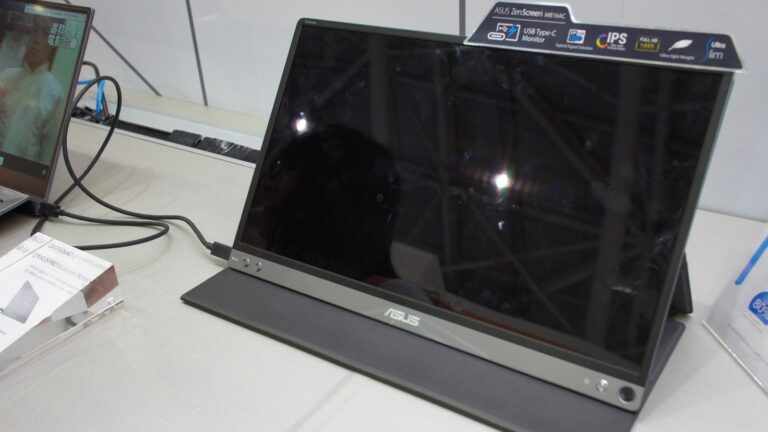
The monitor, computer or console, port, cable and settings must all support the desired mode. A high refresh-rate headline is irrelevant if your work laptop can only drive your chosen resolution at a lower rate through its available connection. Check text rendering, stand adjustment and USB-C power delivery if those determine whether the display works at your desk.
Peripherals: count the parts needed to use them
A wireless peripheral without its required receiver, a keyboard with an unwanted regional layout or a headset dependent on incompatible software can be a false economy. Check battery replacement, ear cushions, switches or other likely wear items where relevant. Evaluate a bundle’s extras at the amount you would willingly pay for them, which can be zero.
Build two reference prices
The legal reference price and your buying reference serve different purposes. In the EU, announcements covered by the price-reduction rules generally refer to the lowest price applied by that trader over the preceding period of at least 30 days, subject to the rules’ scope and permitted national arrangements. That is not necessarily the lowest price anywhere in the market.
Your buying reference is the current delivered cost of acceptable alternatives: same model, condition, seller terms and essential specification. Also examine the exact product’s longer price history where reliable data exist. A manufacturer’s recommended price or an old launch price is not automatically its normal recent selling price.
Price trackers help, but their records need interpretation. Keepa’s offer documentation distinguishes offer conditions and shipping information and warns that historical offers can be outdated. Coverage, update timing, coupons and the price type selected can affect what a chart tells you. An Amazon tracker is not a complete record of all local retailers.
Use the graph to ask better questions, then verify the live cart. Match the exact variant and seller; include delivery, mandatory fees and qualifying memberships. Save the offer details if the terms will matter later.
The seller matters after the countdown ends
A marketplace is a channel, not a single seller. Identify the legal trader, location, invoice issuer, return address and warranty contact. A low price from an unfamiliar seller is not automatically fraudulent, but the transaction must be clear enough to evaluate.
For EU consumer purchases from professional traders, the legal guarantee framework is separate from an optional commercial warranty. Distance purchases generally have a 14-day withdrawal right, with exceptions and rules about return costs and handling. In-store change-of-mind returns are a different question. Outside the EU, consult the relevant local rules; these protections are not a worldwide template.
A clearance label does not by itself describe the condition of the goods or remove applicable consumer protections. Check disclosed defects and terms rather than assuming “sale” means either risk-free or no rights.
Urgency can be legitimate when stock is limited. A resetting timer or unverifiable scarcity claim deserves skepticism. The FTC’s work on dark patterns documents misleading countdowns, while the European Commission’s March 2026 sales-practices check found problems in the traders examined. Neither supports claiming that every campaign or retailer behaves this way.
Decide what would make you buy before the sale begins
Write down the job the device must do, the non-negotiable specifications, the minimum support period you will accept and the maximum delivered price. Choose a few acceptable models or configurations rather than a vague ambition to “get a bargain.”
Buy when a suitable product meets that threshold and the terms are clear. Waiting can make sense if the purchase is optional, the current price is unattractive and you can tolerate losing the specific stock. Waiting is less useful when it delays work or forces a costly temporary purchase. No responsible guide can promise a future minimum price.
Ignore an offer when the only reason to buy is its percentage. The best Black Friday outcome may be a well-chosen previous-generation device, a newer alternative with a longer useful life—or keeping the equipment that already does the job.
Smarter choices start with clearer information.
MASEVIO researches, compares and explains products, technology and emerging ideas to help make everyday decisions easier to understand.
MASEVIO may use affiliate links in some articles. If you buy through an eligible link, MASEVIO may earn a commission at no additional cost to you. Editorial opinions are not determined by affiliate partnerships.


Make every day smarter.
Discover what matters now — useful ideas, standout products, clearer comparisons and stories worth knowing.